
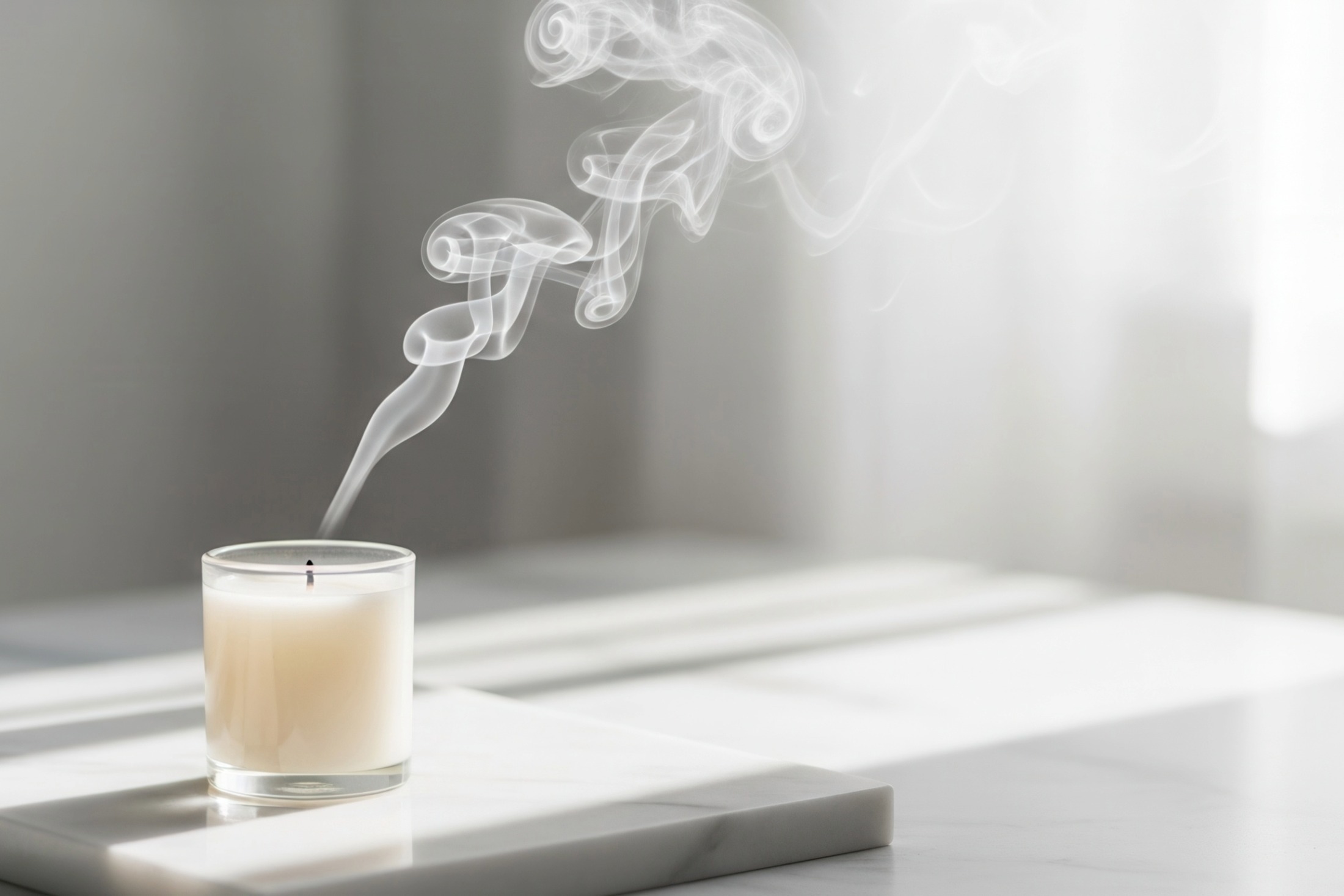
You’ve spent the last three hours transforming your space. The hot throw has filled the room with a sophisticated, curated aroma, and the ambiance is exactly where you want it. Then, it’s time to head out or go to bed. You lean over and blow out the flame.
In an instant, a thick plume of acrid grey smoke replaces the fragrance you just spent all evening enjoying.
If you want to maintain the integrity of your environment and your candle, it’s time to stop blowing and start snuffing. Investing in candle snuffers or learning correct oxygen-deprivation techniques isn’t just about vintage aesthetics—it’s a foundational pillar of proper candle care. How you extinguish a flame matters just as much as how you light it.
Table of Contents
- Key Takeaways
- The Problem with the “Big Blow”: Smoldering & After-Smoke
- The Science of Candle Snuffers: Oxygen Deprivation
- Preserving the Wick’s Structural Integrity
- Perfecting the Ritual: Advanced Candle Maintenance
- Frequently Asked Questions (FAQs)
- SEO Keyword & Strategy Summary
Key Takeaways: Why Use Candle Snuffers?
- Eliminates After-Smoke: Snuffing traps and suppresses acrid smoke that ruins a room’s scent profile.
- Prevents Wax Splatter: Blowing out a flame violently can displace liquid wax, damaging furniture or burying the wick.
- Preserves the Wick: Oxygen deprivation leaves wicks primed with a thin layer of wax rather than brittle and charred.
- Simple Alternatives Exist: If you don’t own a bell snuffer, a secure vessel lid works on the exact same scientific principle.
The Problem with the “Big Blow”: Smoldering & After-Smoke
When you blow out a candle, you aren’t just extinguishing the fire; you are forcing the wick into a prolonged state of incomplete combustion. This creates what home fragrance professionals call “after-smoke.”
This lingering smoke is heavy, carbon-dense, and highly aggressive. It can quickly overwhelm the delicate top notes of a premium fragrance, leaving your room smelling like a campfire rather than the intentional scent you selected.
Furthermore, blowing forcefully on a liquid wax reservoir introduces physical chaos. It can cause hot wax to splatter onto your table or skin. Worse, it often pushes the flexible, warm wick out of alignment. If a wick shifts off-center, it will cause an uneven burn and lead to severe tunneling issues the next time you strike a match. For a deeper look at fixing these shape deformities, read our comprehensive Candle Tunneling 101 Fix Guide.
Why should you use a candle snuffer?
You should use a candle snuffer because it extinguishes a flame instantly through oxygen deprivation rather than physical force. This prevents the wick from smoldering and generating acrid after-smoke, eliminates the risk of hot wax splattering on furniture, and ensures the wick stays perfectly centered for its next burn cycle.
The Science of Candle Snuffers: Oxygen Deprivation
The goal of extinguishing a candle safely is to kill the flame instantly without disturbing the delicate molten pool or the wick. Candle snuffers operate on the simple thermodynamic principle of cutting off oxygen. There are two primary ways to achieve this like a pro:
1. The Traditional Candle Snuffer
A classic, bell-shaped metal snuffer on a long handle is the quintessential tool for a reason. When you place the bell over the flame, it creates an immediate micro-vacuum. The flame consumes the remaining trapped oxygen within milliseconds, leaving behind a small cloud of carbon dioxide that smothers the fire. Any minor after-smoke is physically trapped inside the bell rather than venting out into your room.
2. The Lid Method
If you don’t have dedicated candle snuffers handy, you likely already have the perfect alternative sitting right under your nose. Most high-end, premium home fragrances come contained in heavy glass or ceramic vessels equipped with functional, fire-safe covers. By placing the lid back onto the jar, you instantly cut off the air supply. The flame goes out immediately, and all soot and smoky residue are cleanly sealed inside the vessel.
Preserving the Wick’s Structural Integrity
Beyond protecting your indoor air quality, utilizing candle snuffers directly preserves the physical lifespan of your wick.
Blowing directly on a fragile, charred cotton or wooden wick can cause the delicate tip to fracture, break off entirely, or become brittle. When a wick becomes too short or degraded, it loses its ability to draw up molten wax efficiently. This causes the flame to drown or sputter out prematurely during future burns.
When you smother a flame via oxygen deprivation, the wick remains completely intact and undisturbed. It stays uniformly coated in a fresh, thin layer of cooled wax. This process essentially “primes” the wick, locking in its structural integrity and making it incredibly easy to relight safely for your next session.
Maxwell Thomas Pro-Tip: All of our signature amber jars include a custom, heavy-gauge matte black lid specifically engineered for this purpose. Instead of blowing out your candle at the end of the night, simply replace the lid. It’s the single most efficient way to keep your living space smelling like our signature fragrances—not the smoke.
Perfecting the Ritual: Advanced Candle Maintenance
Grooming your environment is an art form rooted in details. Achieving a clean, long-lasting burn requires pairing your extinguishing methods with other vital habits. To protect your home investment, always ensure you follow these basic maintenance protocols:
- Trim Before Every Light: Always trim your wick to 1/4 inch before striking a match to keep the flame size controlled.
- Respect the Melt Pool: Allow your candle to burn completely to the edges of the jar to avoid leaving unused wax rings along the glass.
- Eradicate Air Drafts: Keep burning vessels safely away from ceiling fans or open air currents to maintain a steady thermal column. Read our deep dive into proper candle care and safety for complete instructions.
Next time you’re ready to wrap up your evening burn session, skip the heavy breath and reach for a proper tool or a lid. Your nose, your walls, and your furniture will thank you. If you are looking to elevate your collection further, read our expert curation of luxury candles under $50 that actually smell expensive.
Frequently Asked Questions (FAQs)
Do you really need a candle snuffer?
While not strictly mandatory for a casual user, a candle snuffer is essential for anyone who wants to prevent soot, eliminate foul after-smoke odors, and avoid dangerous wax splatters. It protects both your surrounding home decor and the life of the candle wick.
Is it better to blow out a candle or use a lid?
Using a lid is vastly superior to blowing out a candle. Placing a lid on a burning candle suffocates the flame instantly through oxygen deprivation and locks the resulting smoke inside the jar, keeping your room’s air smelling completely clean.
What is a wick dipper vs. a candle snuffer?
A candle snuffer is a bell-shaped tool that smothers a flame with a pocket of air. A wick dipper is a long metal hook used to gently bend the lit wick into the liquid wax pool to extinguish it instantly without smoke, before pulling it back up straight.
Can putting a lid on a candle crack the glass?
If you use a high-quality candle housed in properly thermal-tested, thick glass (such as apothecary amber jars or heavy ceramic) with its matching heat-safe metal or wood lid, putting the lid on will not crack the container. Avoid using thin, non-treated glass jars.
Conclusion: Honor the Home Aroma
Mastering the small nuances of home fragrance maintenance alters how you interact with your sanctuary. By replacing a forceful breath with a deliberate touch of a candle snuffer or a secure vessel lid, you preserve the precise olfactory notes you carefully selected for your home.
Ready to upgrade your home fragrance ritual? Explore the Maxwell Thomas Signature Candle Collection—engineered with professional-grade wax blends, heavy amber glass, and custom matte lids designed for an optimal, smoke-free extinguishing experience.