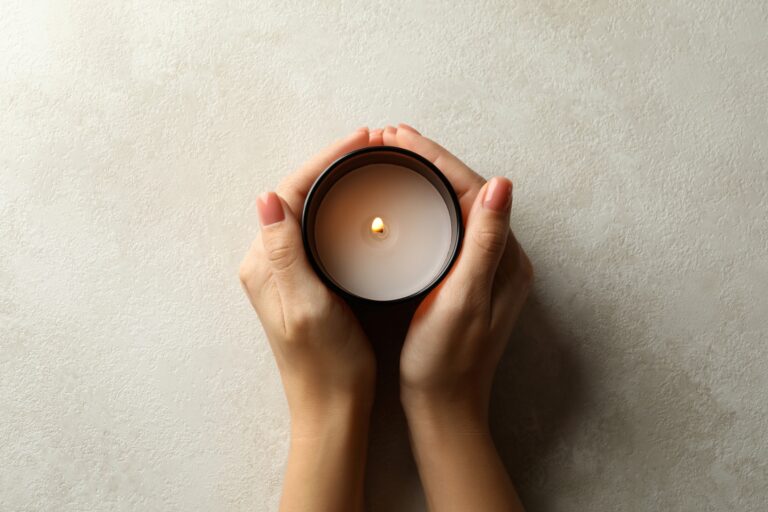
There is nothing quite like the therapeutic flicker of a luxury candle settling into a room. At Maxwell Thomas, we intentionally design our 9 oz amber jars for maximum structural stability and timeless style. Yet, even the most expertly engineered vessel requires strategic placement to perform at its peak.
While the standard warning label on the base covers your basic liabilities, achieving true home fragrance mastery means understanding the exact science behind placement. Practicing mindful candle safety isn’t just about keeping your home safe from fire hazards—it’s also the secret to extending your candle’s lifespan, perfecting your wax pool, and maximizing its aromatic scent throw.
To keep your spaces secure and your wax pools immaculate, let’s explore five common household locations where you should never, under any circumstances, set an open flame.
Quick Reference: Key Takeaways for Candle Placement
If you only have a moment, keep these essential spatial requirements in mind before striking your next match:
- Clearance: Maintain at least a 12-inch radius around the vessel from any combustible textiles or papers.
- Vertical Space: Never place a burning flame beneath a shelf or low ceiling; heat rising directly upwards needs room to dissipate.
- Air Currents: Keep your candle away from HVAC registers, open windows, ceiling fans, and high-traffic pathways.
- Foundation: Always burn on a level, solid, heat-resistant surface protected by a sturdy coaster or trivet.
Table of Contents
- The “Wind Tunnel” (Near Vents, Fans, and Windows)
- Low-Hanging Shelves and Enclosed Cabinets
- Unstable or Heat-Sensitive Surfaces
- The High-Traffic Zone (Hallways and Coffee Table Edges)
- Near “Fluff,” Fabrics, and Stationary Textiles
- Best Practices for Masterful Candle Safety
- Frequently Asked Questions (FAQ)
1. The “Wind Tunnel” (Near Vents, Fans, and Windows)
It is incredibly tempting to perch an amber glass jar on a deep wooden windowsill to create that quintessential, welcoming aesthetic. However, rapid air currents are a premium candle’s worst enemy.
When a persistent draft from an open window, an air conditioning register, or a nearby ceiling fan hits the wick, it forces the flame to dance erratically and bend to one side. This breakdown in flame stability directly sabotages your candle safety and candle health in two distinct ways:
- Asymmetrical Wax Melting: The localized flame heat is pushed strictly to one flank of the jar. This prevents the wax from liquefying in an even, edge-to-edge circle, leading to a frustrating issue known as candle tunneling. Once a candle tunnels down the center, the remaining perimeter wax is wasted.
- Excess Soot Production: The constant interruption of oxygen to an erratic flame causes incomplete combustion. This results in bursts of dark smoke and accelerated soot accumulation that stains your beautiful amber glass and releases unnecessary particles into your indoor air.
To maintain a clean-burning experience, position your candle far outside the path of any direct household airflow channels.
2. Low-Hanging Shelves and Enclosed Cabinets
Basic thermodynamic principles tell us that heat rises vertically. Tucking an active candle inside a cozy bookshelf alcove or under a low kitchen cabinet might look intimate, but it creates a dangerous thermal trap.
As a candle burns, the column of hot air ascending from the flame quickly pool underneath any obstruction directly above it. Over time, this trapped heat can warp, discolor, or dry out expensive wood finishes, peel away veneer glues, and compromise structural materials. In worst-case scenarios, if the vertical clearance is too tight, the ambient temperature of the shelf itself can approach its flashpoint—becoming a critical fire hazard.
The Golden Rule of Clearance: Always ensure your candle has plenty of vertical “breathing room”—ideally a minimum of two feet of clear space directly above the flame—to allow hot air currents to dissipate naturally and safely into the room.
3. Unstable or Heat-Sensitive Surfaces
While Maxwell Thomas glass jars are intentionally built with thick, weighted bases for structural equilibrium, the glass itself inevitably absorbs heat during extended burn sessions.
Placing a hot jar directly onto a delicate antique finish, a soft acrylic console table, or directly near electronic components carries serious risks. Prolonged heat transfer can leave permanent, scorched white rings on wood lacquer or completely melt sensitive plastics.
Furthermore, never place a candle on an uneven or soft foundation like a plush rug, an unanchored table runner, or a sagging cushion. A level, rock-solid foundation is essential for core candle safety. If the vessel rests at even a minor tilt, the molten liquid wax pool will sag to one side, leaning the wick off-center and causing an uneven, inefficient burn profile.
4. The High-Traffic Zone (Hallways and Coffee Table Edges)
Proper room placement isn’t just about static furniture clearances—it requires accounting for the daily physical movement of pets, children, and guests inside your home.
Avoid high-impact zones such as narrow hallway entrance tables, the immediate outer edges of coffee tables, or low nightstands. A passing jacket sleeve, a wagging dog tail, or an energetic toddler can easily clip the jar, resulting in a sudden spill of hot liquid wax—or worse, a dangerous tipping incident.
According to data compiled by the National Fire Protection Association (NFPA), a substantial percentage of home candle fires are initiated when an open flame is accidentally bumped, overturned, or forgotten in active areas of the house. Keep your lit vessels safely tucked back toward the stable center of large tables, well out of reach of curious paws and busy elbows.
5. Near “Fluff,” Fabrics, and Stationary Textiles
It may sound obvious on paper, but dangling window curtains, plush throw blankets, open books, and stacks of mail are among the most common “silent” hazards in home fire prevention.
A room can feel perfectly still until someone opens a front door or a central HVAC unit kicks into gear. A sudden, unexpected gust of air can effortlessly lift a lightweight sheer curtain or blow a loose piece of paper directly into an active flame across the room.
Distance Rules for Combustible Materials
To keep your space completely secure, always maintain a strict boundary between your flame and surrounding objects. Use this simple classification table to guide your layout choices:
| Proximity Hazard | Safe Distance Required | Why It Matters |
| Window Drapes & Sheers | 12 inches minimum | Billowing fabrics catch air easily and can move rapidly into a flame zone. |
| Books, Magazines & Mail | 12 inches minimum | Dry paper stocks possess a low flashpoint and ignite rapidly upon direct contact. |
| Bedding & Toss Pillows | 3 feet minimum | Bedroom textiles are involved in over one-third of all recorded residential candle fires. |
| Wall Art & Tapestries | 6 inches horizontally | Radiating side heat can bake frames, blister canvas paint, or ignite hanging fibers. |
Best Practices for Masterful Candle Safety
Practicing premium candle safety doesn’t mean compromising on home ambiance. By proactively managing where and how you burn, you shift from basic hazard avoidance to true home fragrance optimization. Use this structured routine every single time you prepare to light a candle:
The Safe Burn Checklist
- Trim the Wick Consistently: Before striking a match, always trim your cotton or wooden wick down to precisely 1/4 inch. This single step regulates flame height and prevents excessive smoking.
- Clear the Debris: Ensure the cooled liquid wax pool is completely free of match sticks, carbon wick clippings, or dust accumulation before relighting.
- Anchor the Base: Never let the base of the jar directly touch delicate furniture. Utilize a heavy slate, stone, ceramic, or thick cork coaster.
- Monitor the Clock: Limit individual burn sessions to a maximum of 4 hours. This prevents the glass from overheating and preserves the delicate scent profile of the fragrance oils.
- Extinguish Safely: Avoid blowing forcefully on a molten wax pool, which can splash hot liquid. Instead, use a dedicated candle snuffer or gently dip the wick to extinguish the flame with zero residual smoke.
Frequently Asked Questions (FAQ)
How far away should a candle be from walls and curtains?
According to general fire prevention standards, you should always maintain at least 12 inches of horizontal clearance between a burning candle flame and any surrounding objects, walls, or window treatments.
Why do candles suddenly smoke or flare up?
A sudden flare-up or burst of black smoke is typically triggered by localized air drafts or an untrimmed wick. Fast-moving air currents interrupt the steady flow of oxygen, causing the flame to flicker erratically and burn through its fuel unevenly.
Can a candle jar crack or explode from heat?
While premium amber jars are explicitly tempered to withstand high thermal loads, any glass vessel can crack if the flame burns completely down to the absolute bottom of the container. To prevent thermal shock, stop burning your candle permanently when there is roughly 1/2 inch of solid wax remaining at the base.
What is the safest way to extinguish a lit candle?
The safest method is using a metal candle snuffer or a bell snuffer. This cuts off oxygen cleanly to extinguish the flame instantly, preventing hot liquid wax from splashing onto nearby surfaces and eliminating the heavy trail of foul-smelling smoke that comes with blowing it out.
Master Your Home Glow
At Maxwell Thomas, we pour our passion into formulating balanced, clean-burning candles designed to elevate your everyday rituals. But true luxury is a collaborative effort—our meticulous design requires your proactive, smart choices at home. By selecting an ideal, draft-free, secure, and clear location for your candle, you do far more than just protect your household. You guarantee a pristine melt pool, a pristine scent throw, and a flawless aromatic journey from the very first burn to the final drop of wax.
Explore our signature, signature hand-poured collection today and find the perfect scent narrative to safely warm your favorite living spaces.